


Five Minute Findings
Five things from the last month worth knowing if you sell online, each readable in about a minute. We have read the articles, pulled out what matters, and added what we’d actually do about it.
This month: ChatGPT has opened a changing room, Google’s spam update came back out of its corner for the second round, a New York conference admitted attribution is still hard, a study explains why people pay double for ketchup, and we revisit the psychology behind a sale.




ChatGPT can now virtually try on clothes for you
Source: TechCrunch. Also shared on X.
Read more1 MINUTE SUMMARY
On 1 October 2026 OpenAI launched two shopping features in ChatGPT, globally. Fashion retail has spent years trying to shorten the changing room queue. OpenAI has simply moved the changing room.
Virtual try-on. Upload a selfie or a full-body photo, then press “try on” in ChatGPT’s shopping results to see how clothing or accessories would look on you. You can also upload a screenshot of an item from any website and ask it to try that on.
Favourites. Save products to a library in the app, kept alongside your try-on images.
Shop the look. Describe a style and ask ChatGPT to find the pieces, or upload a photo of a celebrity’s outfit and ask it to find versions you can buy.
It runs on OpenAI’s new image model, ChatGPT Images 2.5.
Two bits of context. This isn’t OpenAI’s first go at shopping. It did an instant checkout feature that didn’t perform and was dropped earlier this year. And Google has offered virtual try-on for clothing since July 2025, so this is a race to be the best, not the first.
The ‘will this suit me?’ question we all have will become a moment spent in an AI chat window. If your products don’t appear in ChatGPT’s shopping results, there’s no try-on button to press. So the useful question isn’t ‘should we worry about AI?’ It’s ‘can these tools find, understand, and show our products?’ (Marketing, you can change it, but you can’t kill it!)
That comes down to unglamorous work. Complete product feeds, clean structured data, accurate titles and descriptions, and product photography good enough to be shown on a stranger’s selfie. Paid Ads in ChatGPT that reach the right audience at the right time.
Fashion first. We’d expect the same idea to reach anything people struggle to picture at home, like furniture, flooring, or even paint and wallpaper. Although for the record OpenAI hasn’t announced that (yet). If ChatGPT ads end up sitting next to these results, that’s a new place to buy customer attention. Worth watching. Not yet worth rebuilding your plan around.
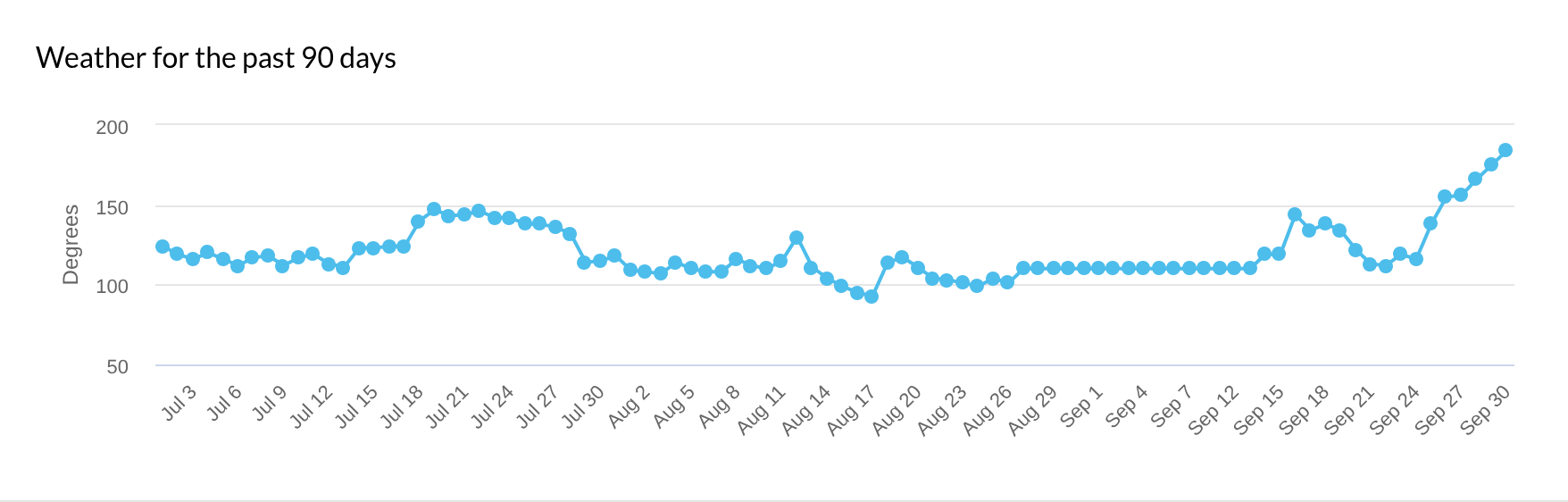
Google September 2026 Spam Update Phase Two Hit September 30th
Source: Search Engine Roundtable
Read more1 MINUTE SUMMARY
Google announced its September 2026 spam update on 24 September. It targets sites that break Google’s spam policies, and it’s rolling out in waves rather than all at once.
The first wave of ranking changes showed up from 25 to 27 September.
Things calmed down, then a second wave hit on 30 September and carried into 1 October. Several site owners reported sharp traffic drops on the 30th, and Google Discover traffic was especially jumpy.
Google says this one takes around two weeks to roll out, against the usual couple of days for a spam update. So more waves are possible before it finishes.
Separately, on 1 October Google updated its guidance on AI-generated content. It now calls it critical to manually fact-check and review AI content for accuracy before publishing. Some commentators think that’s connected to this update. Google hasn’t said so, so treat that as speculation.
If your organic traffic dropped sharply, start by checking the dates. Open Search Console and see whether the fall lines up with 25 to 27 September or with 30 September to 1 October. If it does, this update is a likely suspect. If it started earlier or later, look elsewhere first.
Then check you’re not mistaking the season for a penalty. Early Christmas trading, a broken tracking tag or a site release can all look like a Google problem from a distance.
If the dates do line up, read the spam policies honestly against your site. Common culprits include thin pages made at scale, AI content published without anyone checking it, and links bought or swapped to game rankings. Fix what applies, then wait for the rollout to finish before judging the result. Making big changes mid-update makes it very hard to tell what worked.

10 things we learned about where commerce media goes next
Source: The Drum
Read more1 MINUTE SUMMARY
The Advertising Club of New York held its first Commerce Media Exchange, and The Drum rounded up ten things they learned. Commerce media means advertising that can be tied to an actual purchase, whether on a retailer’s site, a marketplace or a social platform. Three points stood out for us.
Attribution is still hard for everyone. Businesses of every size are struggling with it, and more of them now want to measure incrementality: the sales that only happened because of the ad, not the ones that would have happened anyway. It’s the right question. It’s also much harder to answer than reading a dashboard.
Shops can sell the website. One retailer reported online sales rising 8x after an in-store activity. Physical stores are increasingly treated as showrooms for digital sales, not a separate business.
Brand and performance are converging. With AI changing how people find products, speakers argued the two are becoming two sides of the same coin.
In most cases, it agreed it was wrong once challenged. The trouble is someone has to know enough to challenge it.
Most businesses and marketing agencies don’t have an attribution problem, more a ‘we believe whichever report flatters us most’ problem. Every platform claims credit for the same sale. Add them up, and you’ve often sold more than you actually did.
You don’t need an enterprise measurement stack if you’re not enterprise size. Run one simple incrementality test on your biggest channel. It sounds scary, but switch it off, or cut it hard, in one region or for a set period, and compare sales against areas where you didn’t. It won’t be perfect, but it will tell you more than another month of platform-reported ROAS.
Finally, brand marketing is performance marketing wearing a fake beard and glasses: it shows up later, and it shows up in the numbers. Don’t ignore it while only chasing the people at the bottom of the funnel.

Havas Science of Desire
Source: Havas, The Science of Desire
Read more1 MINUTE SUMMARY
Havas launched The Science of Desire at Cannes Lions in June 2026. It’s a big study of more than 87,500 people, over 2,400 brands, and 10 markets. The headline that stood out to us was that 84% of brands sit in a middle ground of customer indifference. People know who they are. They just are ‘meh’ towards them. One caveat, and call us cynical. This study comes from a global advertising group that sells brand-building, and it has concluded that brands should invest more in brand-building. It’s a bit like a bakery publishing research showing that bread is underrated and just as enjoyable as chocolate.
It says desire comes from three things working together:
Attraction. Does the brand stand out and pull people in?
Affinity. Does it fit who the customer is and what they value?
Attachment. Does it create habits that bring people back?
The numbers that matter most:
- Brands that improved on all three drivers year on year were 2.4 times more likely to grow than average.
- Attraction is the easiest to build: roughly a quarter of brands score strongly on it. Attachment is the hardest, with only 12% scoring strongly, and it’s the clearest predictor of long-term growth.
- Desirable brands were up to four times more likely to be cited by AI search tools.
Creating desire for a brand isn’t always easy, as there are more tangible returns in demand capture activity within performance marketing. However, investing in long-term brand activity designed to gradually improve one or more of the three highlighted areas can deliver significantly more growth long term.
For an online business, attachment lives in unglamorous places: delivery that turns up when promised, an easy reorder, a returns process that doesn’t feel like a punishment, emails people actually want to open. So start by checking your repeat purchase rate, and how it’s moved over the last year. If it’s flat or falling, that’s probably a better place to invest than another campaign aimed at people who’ve never heard of you.
And the AI angle matters. If AI search tools favour brands people already want, then demand capture alone gets harder over time. Brand work is slow, but it’s becoming part of how you get found.

Introduction to Behavioural Economics
Source: Converted
Read more1 MINUTE SUMMARY
Most marketers and businesses will have heard of behavioural economics and the power of influencing cognitive biases. Long story short, people aren’t very rational, but that can be predictable. We wrote a beginner’s guide to the bits we use every day in our conversion rate optimisation testing. It’s roughly what goes on inside a CRO agency’s head, tidied up and filtered for public viewing.
The most common cognitive biases and what they mean
Cialdini’s principles of persuasion
The difference between neuromarketing and behavioural economics.
You don’t always need a redesign to sell more. Often you need to understand why people hesitate, and remove the reason.
Pick one principle and test it properly. Put reviews next to the add-to-basket button rather than at the bottom of the page. Show the higher-priced option first so the others feel reasonable (anchoring). Pre-select the delivery option most people choose anyway (the default effect). Then measure whether it changed what people bought, not just what they clicked.
Subscribe Now
Stay informed and never miss an update! Subscribe now to receive the latest news, expert insights, and trending articles delivered straight to your inbox.